
"cultural heritage"
300 article(s) found

Espresso: the new darling of the Chinese coffee market
At present, China's coffee consumption is growing at an annual rate of 15% to 20%, and is becoming the most potential coffee consumer in the world. In this context, the number of cafes in the country is growing rapidly, and coffee brands are becoming more and more abundant. In the current domestic coffee market, there are three active forces: local, European, American and Korean, but the real espresso is rare! 2014

Shanghai take-out coffee shop recommendation-RAC Coffee & Bar Shanghai petty bourgeoisie coffee shop recommendation
Professional coffee knowledge exchange more coffee bean information Please pay attention to the coffee workshop (Wechat official account cafe_style) in a rapidly developing environment, occasionally, we also need to hide in the safe harbor for a rest, calm our hearts and start again. When I came to Shanghai, due to the historical development in the past, in addition to the original heritage of the East, it also retained the traces left over by Western culture.

Argentine Historical and Cultural legends in the Classic Coffee list
Buenos Aires, the capital of Argentina, is said to be a city with more cafes than Paris. There are currently 3250 coffee shops in Buenos Aires, which means there is one coffee shop for every 1000 people in the city. Argentine media wrote that the coffee shop is the load of daily life and historical heritage. It can be used not only for people to call friends and talk, but also to be isolated from the group.

Argentine Historical and Cultural legends in the Classic Coffee list
Buenos Aires, the capital of Argentina, is said to be a city with more cafes than Paris. There are currently 3250 coffee shops in Buenos Aires, which means there is one coffee shop for every 1000 people in the city. Argentine media wrote that the coffee shop is the load of daily life and historical heritage. It can be used not only for people to call friends and talk, but also to be isolated from the group.

The famous cafe in Guangzhou, the boutique cafe in Dongshankou, the literary and artistic place of Guangzhou.
Professional coffee knowledge exchange more coffee bean information please follow the coffee workshop (Wechat official account cafe_style) front street-own roasting coffee shop in Guangzhou, speaking of modern design, accent, fascinating, but also rich in historical and cultural heritage of the literary and artistic place, Dongshankou is definitely your unique

Introduction to the origin of global coffee-Cuban boutique coffee beans Cuban coffee flavor Cuba
According to records, there were 2067 coffee plantations in Cuba in 1833. Among them, the earliest seven coffee plantation sites, such as Raglan Piedra, Elkovre, El Salvador and Nisto Perez, are listed as World Cultural Heritage. These seven coffee plantations are located in the foothills of Maestra in the provinces of Santiago and Guantanamo in southeastern Cuba in the 19th century (figure 17 is a postcard).

Argentine Historical and Cultural legends in the Classic Coffee list of San Bernardo Cafe
Buenos Aires, the capital of Argentina, is said to be a city with more cafes than Paris. There are currently 3250 coffee shops in Buenos Aires, which means there is one coffee shop for every 1000 people in the city. Argentine media wrote that the coffee shop is the load of daily life and historical heritage. It can be used not only for people to call friends and talk, but also to be isolated from the group.

Taste characteristics of Spanish Coffee Bean Flavor description and treatment
In Spain, you will never be blamed for drinking coffee. Spaniards deeply understand the role and impact of coffee on life. It is through coffee that they taste the joy of life. If you come to Spain, you will feel that life has turned a new page, you have too much to see, the Holy Family Church and Quill Park and many other world cultural heritages are waiting for you, but

Get an overview of the coffee industry
Coffee, as a traditional western drink, has a long history and cultural heritage. The world consumes at least 400 billion cups of coffee every year, and the current annual global coffee consumption is about 10 million tons. Coffee is the first of the two largest drinks in the world, and it is also the second largest trading commodity in the world after oil. China's coffee industry has been introduced and developed with the development of reform and opening up.
Argentine Historical and Cultural legends in the Classic Coffee list
Buenos Aires, the capital of Argentina, is said to be a city with more cafes than Paris. There are currently 3250 coffee shops in Buenos Aires, which means there is one coffee shop for every 1000 people in the city. Argentine media wrote that the coffee shop is the load of daily life and historical heritage. It can be used not only for people to call friends and talk, but also to be isolated from the group.

Treacherous coffee divination the origin of coffee drinking in the first place.
The treacherous Turkish coffee [Turkish coffee], also known as Arabian coffee, is the ancestor of drinking coffee. Turkish coffee and its traditional culture are listed as the intangible cultural heritage of UNESCO. It is an incomparably noble etiquette for Turks to make a cup of traditional coffee for visitors, even fasting in advance.

A brief introduction to Yunnan Hougu Coffee Development status of Hougu Coffee in China
Hougu Coffee is the first local coffee brand in China. in addition, there are no other large-scale brands in China. Relying on the huge domestic consumer market and development potential, Hougu Coffee has good market development conditions. Hougu Coffee has a profound Chinese cultural heritage, absorbing the cultural traditions of Taoism and Confucianism. The meaning of Hougu comes from the moral Sutra, and the latter represents the king as the queen.

Barista is a highly respected profession abroad.
Coffee bar teachers in Europe and the United States are a very respected profession, and because there is no age limit, they generally have good quality and cultural heritage, and many people even have the titles of master, doctor and professor. they are good at communicating with others, have rich social experience and have an understanding of human nature. In their hearts, they make more than just a cup of fragrance.

General situation of Coffee Industry basic knowledge of boutique coffee
Coffee, as a traditional western drink, has a long history and cultural heritage. The world consumes at least 400 billion cups of coffee every year, and the current annual global coffee consumption is about 10 million tons. Coffee is the first of the two largest drinks in the world, and it is also the second largest trading commodity in the world after oil. China's coffee industry has been introduced and developed with the development of reform and opening up.
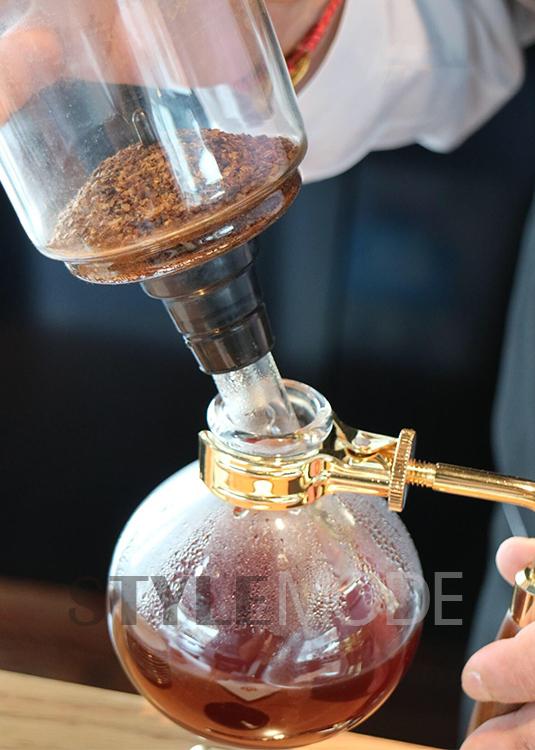
New information on domestic coffee competition: the 4th Pu'er Cup siphon Pot Competition landed in Beijing
The finals of the WSC (World Siphonist Championship) World siphon Pot Competition are held in Japan every September. Outstanding contestants from all over the world gather here to exchange skills, through smooth movements and rich coffee knowledge, while showing their coffee heritage, while transmitting their own elegant demeanor and connotation to the world. It is a very expressive and ornamental top in the coffee industry.
The new rule of Beijing characteristic district Nanluoguxiang bar and cafe should not exceed 25%.
On December 3, 2014, the proportion of hotel cafes in Nanluogu Lane in Beijing should not be higher than 25%. Small barbecue shops are not allowed to enter Nanxinkang. Catering enterprises with less than 300 square meters are not allowed to open stores in Gui Street. In the future, if you want to open a shop in the six characteristic commercial districts of Qianmen Street, Xianyukou Food Street, Nanluogu Lane, Nanxinkang, Kui Street and Wudaoying, you have to cross several thresholds. And has already entered

Basic knowledge of boutique coffee general situation of coffee industry
Coffee, as a traditional western drink, has a long history and cultural heritage. The world consumes at least 400 billion cups of coffee every year, and the current annual global coffee consumption is about 10 million tons. Coffee is the first of the two largest drinks in the world, and it is also the second largest trading commodity in the world after oil. China's coffee industry has been introduced and developed with the development of reform and opening up.

Integrate the coffee industry; the Christmas atmosphere of Coffee Street on University Road is getting stronger and the old street is drifting with western flavor.
Explore cultural resources and hold coffee season events: at 7: 00 p.m. on May 27, 2016, with the singing of the old song "swing together", the first fashionable Nanwei Old Street University Road Coffee Culture season in Qingdao opened grandly in the trestle Plaza. At the scene of the opening ceremony, the local music team of Qingdao was happy to bring a wonderful time to meet the coffee theme concert. As a century-old street and university in Qingdao

Introduction of flavor varieties in Bali coffee boutique coffee bean manor
When it comes to coffee in Bali, Indonesia, we only know that Golden Rabbit Coffee is an old brand of Indonesia. The coffee in Bali is quite special and is called Golden Coffee. It is made by grafting the roots of Arabica coffee trees and the branches and leaves of coffee grown by Robosta. It is famous for its golden color, rich aroma and low caffeine. However, Bali is not

The most artistic cafe in Kyoto, Japan, a must-visit place for travel in Japan.
As the most artistic cafe in Kyoto, Shigeru has been rated as Japan's tangible cultural heritage since 2003. Maojiro Tanegawa, founder of Maojiro, Japan, built eight teahouses in Yoshida Mountain. Maojiro is one of them. With the passage of time, these teahouses have gradually withered and been abandoned for nearly a decade. Maojiro Tanegawa's grandchildren reorganized and opened the building.